
USPS LiteBlue eRetire: Retirement Planning
If you work for the United States Postal Service and retirement is getting closer, LiteBlue eRetire can help you understand your retirement options before you leave USPS.
You can use eRetire to review retirement information, get annuity estimates, compare potential retirement dates, access retirement-related forms, and arrange retirement counseling when available.
What Is LiteBlue eRetire?
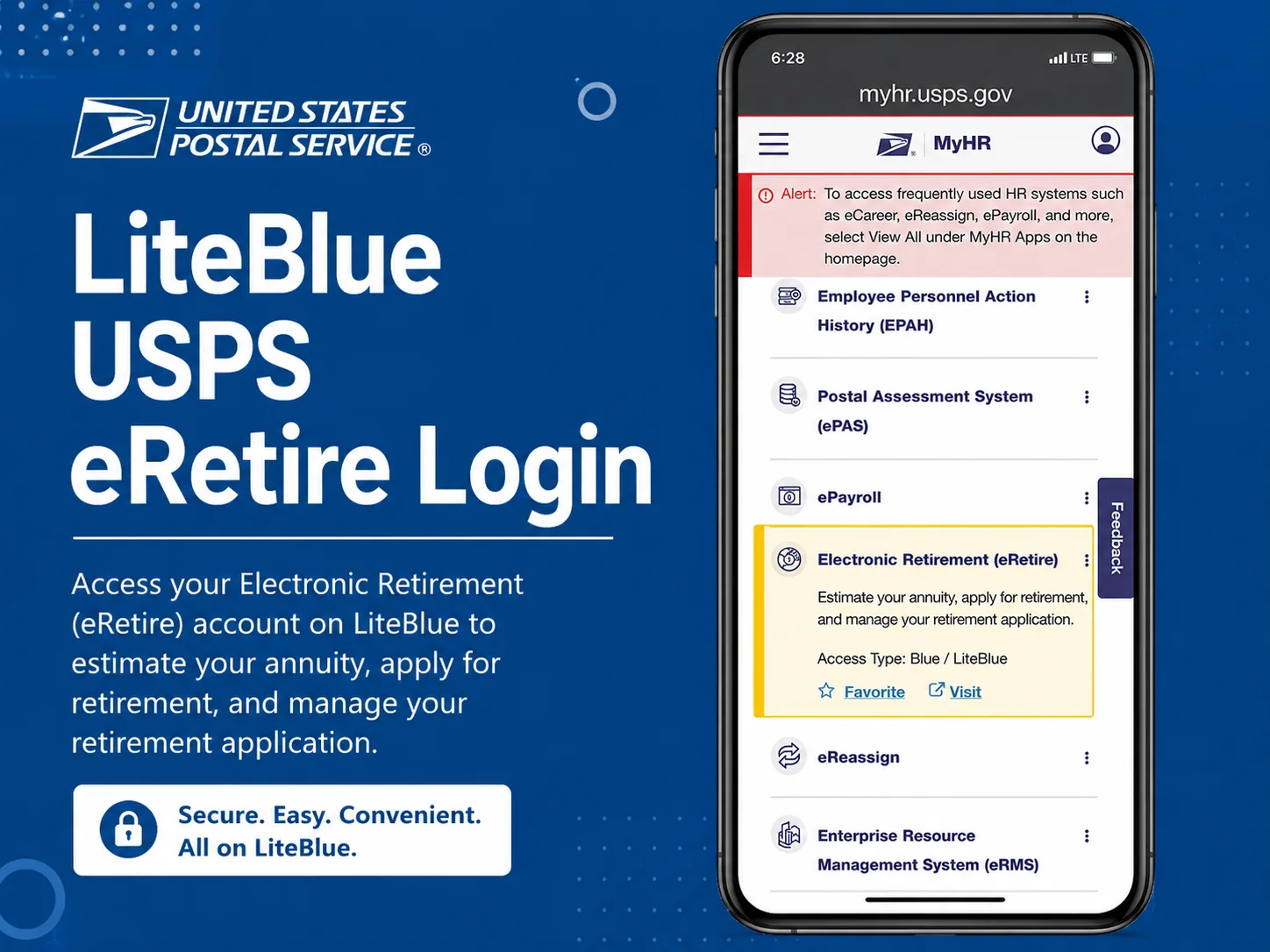
LiteBlue eRetire is a USPS retirement planning and self-service application available through the LiteBlue employee portal. It is for employees who are getting closer to retirement eligibility and need to start planning their transition out of the Postal Service.
Depending on your eligibility and employee status, it can help you in:
It is a retirement planning and preparation tool. It does not itself pay your pension, approve your retirement, or replace the federal retirement process. Your final retirement benefit is determined under the retirement rules that apply to you and your certified employment record.
How to Access LiteBlue eRetire?
Start by signing in to the LiteBlue USPS using your credentials. Your login process includes:
Who Can Use?
eRetire isn’t necessarily available to every USPS employee. USPS documentation has historically focused eRetire services on employees approaching retirement eligibility, including those within 5 years of becoming eligible and those already eligible or within 180 days of eligibility.
What you see inside eRetire can also depend on your employee status and the particular retirement service you need.
If eRetire doesn’t appear in your LiteBlue applications, don’t automatically assume that there is a problem with your account. You may simply be outside the applicable eligibility window or need assistance from USPS Human Resources Shared Services.
What if you’re a part-time employee?
Older USPS eRetire documentation specifically distinguished full-time employees from certain other employee categories for online annuity estimates.
If you’re part-time, NTFT, a Postal Inspector, or another employee category and eRetire doesn’t provide the estimate you need, contact HR Shared Service Center (HRSSC) rather than relying on a generic online retirement calculator. USPS also provides retirement annuity estimates through other retirement-support channels.
What Can You Do With LiteBlue USPS eRetire?
The exact options available to you depend on your retirement status and employee information. The main functions include retirement estimates, retirement-date planning, application materials, and counseling.
Get a Retirement Annuity Estimate
For many employees, this is the most useful eRetire feature. An annuity estimate gives you an idea of the retirement income you could receive based on the information available in USPS records and the retirement rules that apply to you. Your estimate can take information such as your:
Don’t confuse this with a guaranteed pension amount. An eRetire estimate is a planning figure. The final benefit is determined through the federal retirement process based on your certified record and applicable law.
Compare Retirement Dates
You don’t necessarily have to retire on the first day you’re eligible. Working longer can change your retirement calculation because your service time and potentially your high-3 salary can change.
eRetire can help eligible employees compare estimates for different retirement dates. For example, you may want to compare:
The specific dates and options presented to you depend on your eligibility and the functionality currently available in it.
Retirement Application Materials
When you’re close enough to retirement, It can provide access to retirement application materials and related services. These documents may involve important decisions concerning:
Read each form carefully before submitting it. Retirement elections can have long-term consequences, particularly survivor-benefit decisions and insurance coverage.
Schedule Retirement Counseling
It can also support retirement counseling and retirement information sessions for eligible employees. These sessions can help you understand:
Retirement counseling is useful when you have questions about the USPS process. However, it shouldn’t be confused with individualized investment, tax, or financial planning. You may need a qualified financial or tax professional for those areas.
How Do LiteBlue eRetire Annuity Estimates Work?
An eRetire estimate is based on information available in USPS systems and the retirement rules applicable to you. For a FERS employee, factors can include your creditable service and high-3 average salary.
The basic FERS annuity formula generally uses your high-3 average salary multiplied by your years of creditable service and the applicable retirement multiplier. For many regular FERS retirements, the basic multiplier is 1%.
A higher 1.1% multiplier can apply when a FERS employee retires at age 62 or later with at least 20 years of service. Your individual situation can be different, so don’t calculate your final retirement benefit from a generic formula alone.
What Is Your High-3 Average Salary?
The term high-3 refers to the highest average basic pay you earned during any three consecutive years of creditable service, subject to the applicable federal retirement rules. This matters because your high-3 is one of the important factors used in calculating a FERS annuity.
For example, if your pay increases before retirement, additional time at a higher salary could affect your eventual high-3 average. That’s one reason comparing retirement dates can be useful.
FERS and CSRS
Your retirement system is important because FERS and CSRS have different eligibility and benefit rules.
FERS
FERS generally includes three major components:
Common immediate FERS retirement eligibility rules include:
Age | Service |
|---|---|
62 | 5 years |
60 | 20 years |
Minimum Retirement Age | 30 years |
Minimum Retirement Age | 10 years* |
A retirement with 10 years of service under the applicable MRA rules can involve an age reduction unless you postpone the annuity. Your Minimum Retirement Age depends on your birth year.
CSRS
Some long-serving federal employees may be covered by the Civil Service Retirement System instead. General CSRS optional retirement eligibility can include:
Special retirement situations can have different rules. If you’re unsure whether you are under FERS, CSRS, or another retirement arrangement, check your personnel and benefits information or contact USPS retirement support.
Does Sick Leave Count Toward Retirement?
Accumulated sick leave can be valuable when you’re preparing for retirement. For an eligible federal employee, unused sick leave can increase the service used in calculating the retirement annuity. But there is an important distinction:
Sick leave does not make you eligible for retirement if you haven’t met the required age and service requirements. In other words, you can’t use unused sick leave to replace years of actual creditable service needed to qualify for retirement.
Use LiteBlue eLRA to submit requests for scheduled or unscheduled leave
What About Your TSP?
Your Thrift Savings Plan (TSP) is separate from your USPS annuity. This is important when looking at your eRetire estimate. If eRetire shows an estimated monthly annuity, that number isn’t necessarily your entire retirement income.
You may also have retirement savings in your TSP account. Your TSP balance, investment choices, withdrawals, and distribution strategy are separate retirement-planning decisions.
What About Social Security?
Social Security is also separate from your USPS annuity. If you’re a FERS employee, Social Security is one of the three major components of the FERS retirement system.
Depending on when and how you retire, you may also need to understand the FERS annuity supplement. The supplement may be available to certain FERS employees who retire before age 62 and take an immediate retirement that meets the applicable requirements.
It is not available to everyone. That’s why you shouldn’t assume that your eRetire annuity estimate represents every source of income you may receive after leaving USPS.
Retirement Application Package
When you’re ready to move forward, you’ll need to complete the appropriate retirement paperwork. The applicable package can include forms and elections related to:
Don’t sign retirement paperwork without understanding the elections you’re making. This is especially important if you’re married or considering a survivor annuity.
The exact forms you receive can depend on your circumstances and the type of retirement you’re taking.
Retirement Counseling
If you schedule retirement counseling, prepare your questions before the appointment. You may want to ask about:
Bring your records if you’re concerned that something in your retirement history may be incorrect.
What Should You Do Before Leaving USPS?
Don’t wait until your final day to organize your records. Before separating from USPS, review and save important documents you may need later.
Check your service information
Review your:
If you believe prior federal service is missing, address it before retirement whenever possible.
Review your pay records
Save important earnings statements and other records you may need after leaving USPS. You should also review your leave balances and make sure they appear reasonable. You can use LiteBlue ePayroll to view pay statements.
Save important tax documents
Keep copies of documents such as:
What Happens to LiteBlue After You Retire?
LiteBlue is primarily a USPS employee portal. After you separate from USPS, you should not depend on continuing access to the same employee applications and records.
That’s why it is smart to save important information before your retirement date. After retirement, federal retirement matters are generally handled through the appropriate retiree systems, including OPM for your federal retirement benefit.
What LiteBlue eRetire Does Not Do
It’s just as important to understand the limits of eRetire. It does not:
It helps you prepare for retirement, but the actual retirement process involves additional USPS and federal systems.
LiteBlue eRetire vs. Other Retirement Resources
It helps to keep these services separate.
Service | Main purpose |
|---|---|
LiteBlue | USPS employee portal |
eRetire | USPS retirement planning and retirement services |
HRSSC | USPS employee and retirement support |
OPM | Federal retirement administration |
TSP | Federal retirement savings |
Social Security | Social Security benefits |
You may need all of these resources when preparing for retirement.

Conclusion
LiteBlue eRetire can help you plan for retirement by checking eligibility, estimating annuity payments, comparing retirement dates, and accessing retirement paperwork or counseling. Most importantly, review your service and personal records early and report any errors to USPS HR or the appropriate retirement office so there is enough time to correct them before retirement.